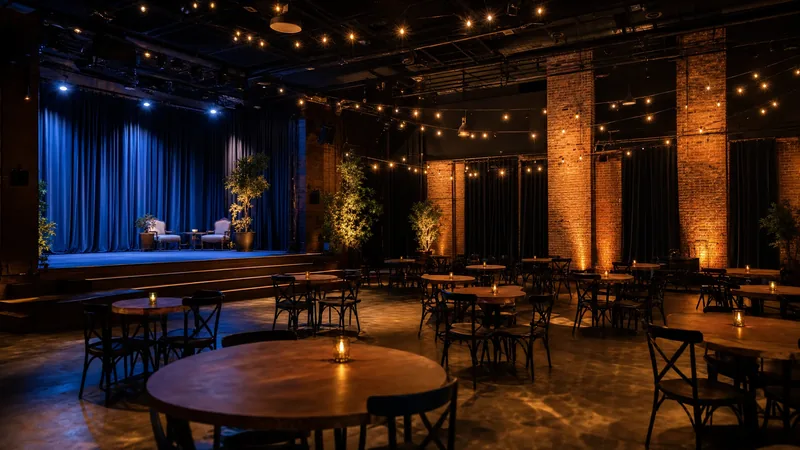
Chicago Public Place of Amusement (PPA) License for Venues and Events
Chicago Public Place of Amusement (PPA) License for Venues and Events
Running an entertainment venue or event space in Chicago? You likely need a Public Place of Amusement (PPA) license. This is a mandatory permit from the City of Chicago that applies to a wide range of entertainment businesses, from nightclubs and music venues to theaters and arcade bars. Without it, you're breaking city law and facing fines up to $10,000.
This guide walks you through the exact steps to get your Chicago public place of amusement license, the fees involved, what inspections you'll face, and how long the approval process really takes.
What Is a Chicago PPA License?
A Chicago public place of amusement license is a city permit required to legally operate a venue where people gather for paid entertainment or amusement. This covers live music venues, dance clubs, comedy clubs, arcades, laser tag facilities, escape rooms, bowling alleys with video games, and similar businesses. The city issues the ppa license chicago to ensure the venue meets fire, safety, and zoning requirements.
The license is valid for two years. Once approved, you must display it prominently at your venue. The City of Chicago issues these permits through the Department of Business Affairs and Consumer Protection (BACP). The license is not optional and not a suggestion: it is a legal requirement before you open your doors.
Beyond the license itself, Chicago also requires compliance with fire codes, occupancy limits, and the Chicago amusement tax, generally 9 percent of admission charges (live cultural performances get a lower rate or an exemption depending on venue size).
Do You Need a Chicago Event Venue License?
Not every business needs a chicago public place of amusement license. Here is when the City of Chicago requires one:
- Your venue charges paid admission: Any entertainment business that charges customers to enter or participate needs a PPA license.
- Your capacity is 100 people or more: Even if you don't charge admission, the city requires a license for any amusement venue with an occupancy of 100 or more people.
- You operate regularly: One-time private events may have different requirements. Contact BACP to confirm your specific situation.
Examples of businesses that need a chicago event venue license include nightclubs, concert halls, dance venues, theaters, video arcades, laser tag, escape rooms, karaoke, pool halls, and any other commercial amusement operation in the city. If you're unsure, call BACP before you spend money on a lease.
Materials and Documentation You'll Need Before You Apply
Before you start the application process, gather these documents. Missing even one will delay your review:
- Proof of business ownership or authorization to operate the venue
- Current lease agreement or deed showing you control the location
- Detailed floor plan showing the venue layout, dimensions, and occupancy
- Occupancy Placard issued by the Department of Buildings
- Business license or other business registration documentation
- Background information for all owners holding 25 percent or more of the business (required for fingerprinting)
- Valid government-issued photo ID for each owner
- Date of birth for each owner (needed for fingerprinting)
- Proof of residential address for all owners
- Individual History Form for each controlling person who must be fingerprinted
You'll also need to schedule a fire department inspection before you can finalize the license approval. BACP will coordinate this once your application is under review. The fire inspection is non-negotiable and happens on the city's timeline, not yours.
Step-by-Step Instructions to Get Your PPA License Chicago
Step 1: Verify You Meet Zoning Requirements
The City of Chicago has strict location restrictions for amusement venues. Before you invest in a lease or sign paperwork, confirm your proposed location is legally zoned for your intended use. Many entrepreneurs waste time and money on locations that will never be approved.
The chicago public place of amusement must comply with these mandatory buffer zones:
- At least 200 feet from any church, school, hospital, or building used exclusively for educational purposes
- At least 125 feet from any R1, R2, or R3 residential district
- Either buffer can be waived only if a distance reduction is granted
Measure these distances carefully on a city zoning map or use Google Maps' distance measurement tool. If your proposed address is too close to a restricted use, the city will deny your application regardless of how perfect everything else is. Ask a local zoning attorney to verify if you're unsure.
Step 2: Expect City Notice to Your Alderman and Nearby Voters
The City provides written notice of your application to the alderman of your ward and to all registered voters living within 250 feet of your proposed venue. You do not send these notices yourself.
Here is what to do:
- Identify your alderman by ward at www.chicago.gov or by entering your address on the city website
- Contact your alderman's office early to explain your plans, since the alderman will receive the City's notice
- Track your application, because the notice goes out after you submit the full application, fingerprints and payment
After the City sends notice, registered voters within 250 feet have 35 days to file a written objection with BACP. If objections are received, your application may face a hearing before it is approved. Plan for additional time and possible legal fees if the hearing is contested. Objections are not common, but they happen in residential neighborhoods or when venues are controversial.
Step 3: Schedule and Pass a Fire Department Inspection
BACP, the Department of Buildings and the Chicago Fire Department must inspect your venue to confirm it meets building, fire safety and occupancy load standards. This inspection is mandatory and there are no exceptions or workarounds.
The fire inspector will check:
- Emergency exits, exit signage, and emergency lighting (these must work and be clearly visible)
- Fire suppression equipment: sprinklers, fire extinguishers, and fire alarm systems
- Occupancy load calculation and whether your signage accurately reflects the maximum capacity
- Aisle widths and pathways: are they wide enough for safe evacuation?
- Electrical safety, HVAC systems, and ventilation
- Accessibility for people with disabilities (ADA compliance)
- Storage of materials that could create fire hazards
BACP will contact the fire department on your behalf once your application is received. Schedule the inspection as soon as they tell you it is ready. Bring your floor plans and occupancy calculations. If the inspector finds violations, you will need to fix them and schedule a re-inspection before BACP can issue your license. Plan for this: fire code corrections are often expensive and time-consuming.
Step 4: Submit Your Application to BACP
Submit your completed application to the Department of Business Affairs and Consumer Protection (BACP). You can apply online through the city's business license application system or in person at the BACP Small Business Center.
Your application package must include:
- Completed BACP application form for public place of amusement license
- All business ownership and operator documentation
- Proof of ownership or authorization to use the venue location (signed lease or deed)
- Detailed floor plan with measurements and occupancy calculation
- Site plan and interior layout, plus the Occupancy Placard issued by the Department of Buildings
- List of all owners holding 25 percent or more of the business with their birthdates
Check your application status with BACP as it moves through zoning, fingerprinting, notice and inspections.
Step 5: Arrange Fingerprinting for All 25 Percent-Plus Owners
All owners holding 25 percent or more of the business must be fingerprinted. The city requires this for background checks. There are no exceptions. Even if you have a spotless criminal history, you must submit fingerprints.
BACP will provide you with a list of approved fingerprinting vendors:
- Schedule an appointment at an authorized Chicago vendor (they have multiple locations)
- Bring a valid government-issued photo ID and your date of birth
- Fingerprint results are sent directly to BACP
- Ask BACP whether any separate vendor charge applies
- BACP adds a separate $40 charge per fingerprinted person to your license fee
Fingerprinting delays kill timelines more than anything else. Start this process immediately once you decide to pursue the license. If multiple owners need fingerprints, do not wait until the last minute to schedule appointments.
Step 6: Pay the License Fee
The cost of your chicago public place of amusement license depends on your venue's occupancy capacity. The fee is based on a two-year term plus an additional charge per fingerprinted owner.
Here is how the pricing works:
- The two-year license fee ranges from $770 to $13,200 depending on your occupancy capacity tier
- Add $40 per person for each owner who was fingerprinted
Example: with two fingerprinted owners, add $80 ($40 per owner) to the license fee for your occupancy tier. Contact BACP for a fee quote based on your specific occupancy capacity and number of owners.
Under the city's application steps, you pay the license fee after submitting the full application and fingerprints, before the alderman and voter notice goes out.
Step 7: Display Your License and Comply with Ongoing Requirements
Once approved and paid, BACP will issue your chicago public place of amusement license. You must display it in a visible location at your venue, typically at the entrance or main office where customers can see it.
Your obligations continue after opening. The city requires:
- Renewal every two years, before the license expires
- Payment of the Chicago amusement tax, generally 9 percent of admission charges (filed separately with the city; this is a significant ongoing cost)
- Full compliance with all fire, safety, and zoning regulations
- Updated inspections if you make structural changes to the venue or alter occupancy capacity
Common Mistakes That Delay or Deny Your Application
Mistake 1: Underestimating occupancy. Your capacity comes from the Occupancy Placard issued by the Department of Buildings, and the license fee tier follows occupancy. If the occupancy on your application does not match what inspectors find, expect delays or a denial.
Mistake 2: Skipping early outreach to your alderman. The City notifies your alderman and registered voters within 250 feet, and any written objections filed in the 35-day window can slow approval. Talking to the alderman's office before you apply helps you hear concerns early.
Mistake 3: Zoning violations. Applying for a license when your venue is too close to a school, church, or residential zone is a waste of time and money. The city will deny you outright. Verify zoning requirements before signing a lease.
Mistake 4: Incomplete background information for owners. Fingerprinting delays kill timelines. Provide complete and accurate birthdates and contact information for all 25 percent-plus owners from the start. Any errors mean re-scheduling fingerprints.
Mistake 5: Fire code violations. Outdated exit signs, broken fire extinguishers, blocked emergency exits, or inadequate ventilation will cause the fire inspector to fail your venue. Fix these before the inspection, not after.
Special Considerations: Video Gaming, Liquor, and Temporary Events
Video gaming machines: If you plan to operate video gaming terminals at your Chicago venue, you need a separate tavern license or consumption-on-premises liquor license from the city. A PPA license alone does not allow you to operate video gaming machines legally. Video gaming requires liquor service in Chicago.
Alcohol service: Selling alcohol also requires a separate liquor license (on-premises for bars and restaurants, or off-premises for retailers). The PPA and liquor license are independent permits. You must apply for both if your business model includes alcohol.
Temporary events: One-time shows or pop-up venues may not require a full PPA license. Contact BACP directly to confirm requirements for your specific event. Some temporary venues are licensed under different rules or may need only an event permit rather than a full two-year PPA license.
Timeline and Expected Results
The full application and approval process typically takes 60 to 90 days, assuming all of these are true:
- Your application is complete and accurate on the first submission
- No objections are filed during the 35-day notification period
- Your venue passes the fire department inspection on the first attempt
- You pay the license fee promptly upon approval
- Fingerprinting is completed quickly by all owners
If objections are filed, add 30 to 60 additional days for hearing preparation. If the fire inspector finds violations, add 30 to 90 days for corrections and re-inspection. Plan to start your application at least 120 days before your planned opening date to avoid rushed timelines.
Tips for Success
- Start early. Apply months before you need the license, not days. Delays happen, fire code corrections take time, and objections can derail schedules.
- Hire a consultant if needed. For complex venues, consider hiring a zoning attorney or fire code consultant to review your plans before submission. The $500 to $2,000 cost is worth it compared to a denied application.
- Keep detailed records. Save copies of all notifications, fingerprinting records, fire inspection reports, and correspondence with BACP. You will need these for license renewal and in case of any disputes.
- Plan for the amusement tax. The city generally charges a 9 percent amusement tax on admission charges. Factor this into your pricing and accounting from day one. This is not optional and is a significant ongoing cost.
- Build community support. Reach out to neighbors and the alderman informally before your formal notification. A venue with community backing is less likely to face objections during the review period.
- Schedule fire inspection early. As soon as BACP gives you the go-ahead, contact the fire department immediately. Fire inspectors have busy schedules, and you want any corrections done before other elements of your review complete.
Important Disclaimer
This article is informational content about the chicago public place of amusement license process based on publicly available city regulations. It is not legal advice, tax advice, or business advice. License requirements, fees, and procedures change regularly, and specific situations may require professional guidance.
For complex business structures, disputes, or questions about your particular situation, consult a Chicago business attorney or a licensed accountant. They can review your circumstances and ensure full compliance with all city, state, and federal regulations. The information in this guide is current as of October 2026, but city rules change. Before finalizing your application, visit the official Chicago Department of Business Affairs and Consumer Protection website or call to confirm current fees and procedures.
Resources and Next Steps
- City of Chicago Department of Business Affairs and Consumer Protection (BACP): https://www.chicago.gov/city/en/depts/bacp/, Submit applications and find application forms
- Chicago Fire Department: Contact through BACP when your application is under review; the fire inspection is required
- Alderman Directory: Look up your alderman at www.chicago.gov using your address
- Chicago Zoning Map: View at the Chicago Department of Planning and Development website to verify your location meets buffer requirements
- Amusement Tax: Administered by the Chicago Department of Finance, which publishes the forms and current rates
Ready to open your Chicago entertainment venue? Start by verifying your location meets zoning requirements, then contact your alderman and BACP to begin the application process. The chicago public place of amusement license is mandatory, but with advance planning and attention to fire code and notification requirements, you can get approved and open your doors legally.