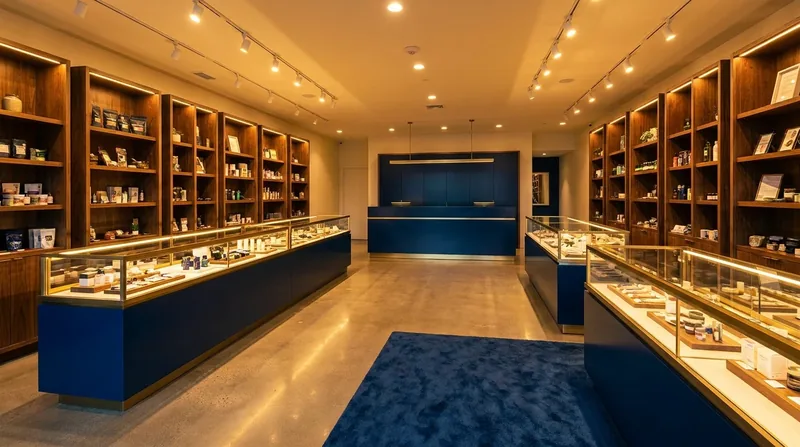
How to Open a Cannabis Dispensary in Illinois: License Types and Social Equity Rounds
How to Open a Cannabis Dispensary in Illinois: License Types and Social Equity Rounds
Illinois has one of the most developed cannabis markets in the United States, with hundreds of dispensaries now operating across the state. If you are considering opening a cannabis dispensary in Illinois, you need to understand the licensing structure, the different business models available, social equity opportunities, and the application requirements. This guide walks you through the process, the costs involved, and what regulators actually require.
Understanding Illinois Cannabis License Types
Illinois cannabis licensing is split between two agencies. The Illinois Department of Financial and Professional Regulation (IDFPR) oversees dispensing organizations (retail dispensaries). The Illinois Department of Agriculture (IDOA) oversees cultivation and processing: craft growers, craft infusers, and cannabis transporters. Understanding these categories is essential because each has its own application process, fee structure, and operational requirements.
Dispensing Organizations (Retail Dispensaries)
A dispensing organization is what most people think of as a cannabis dispensary: a retail storefront where adult consumers purchase cannabis products. Dispensing organizations are licensed exclusively through the Illinois Department of Financial and Professional Regulation (IDFPR). IDFPR awarded conditional dispensary licenses through lottery drawings, and those lotteries have closed; the conditional adult-use dispensing application fee was $5,000 per license. Today most new entrants buy an existing or conditional license, subject to IDFPR rules on ownership changes. Your city or village must also allow cannabis retail and approve your specific location through local zoning.
Craft Grower Licenses
Craft grower licenses, issued by the Illinois Department of Agriculture, allow you to cultivate cannabis in a controlled environment. Until 2026, the legal canopy (growing area) limit was 5,000 square feet. In June 2026, Senate Bill 3222 (signed into law as Public Act 104-463) increased the craft grower canopy limit to 14,000 square feet, significantly expanding the production potential for licensed cultivators. The application fee for a craft grower license is $5,000 through IDOA. Many operators pair craft grower licenses with dispensary licenses or wholesale arrangements to create a vertically integrated operation.
Cannabis Infuser Licenses
Cannabis infusers create finished cannabis products by processing raw cannabis into edibles, topicals, concentrates, and other formulations. An infuser license from IDOA costs $5,000. These licenses have become increasingly valuable as consumer demand for diverse product formats has grown. Illinois also created a social equity track for infuser licenses (discussed below) to specifically support applicants from communities disproportionately impacted by cannabis criminalization.
Cannabis Transporter Licenses
Transporters move cannabis products between licensed facilities under strict security protocols. A transporter license from IDOA also costs $5,000. This license is essential for any supply chain operation but is often overlooked by single-facility operators who handle their own logistics.
Social Equity Cannabis Licenses in Illinois
Illinois recognized early that cannabis criminalization had disproportionately harmed certain communities and implemented social equity programs to address that disparity. Social equity applicants receive preferential treatment and lower application fees, making it possible for people from impacted backgrounds to enter the legal market.
Social Equity Infuser Licenses
Senate Bill 3222, signed on June 12, 2026, created a significant expansion in social equity licensing. IDOA is issuing at least 45 new social equity cannabis infuser licenses by January 2027, with the potential for up to 100 additional licenses starting in January 2028. These licenses are reserved for social equity applicants. Under the Cannabis Regulation and Tax Act, that means an Illinois resident applicant at least 51% owned and controlled by people who have lived for 5 of the past 10 years in a Disproportionately Impacted Area, or who were arrested for, convicted of or adjudicated delinquent for an expungement-eligible offense (or are members of an impacted family), or, for businesses with at least 10 full-time employees, one where at least 51% of current employees meet those criteria. The application fee for a social equity infuser license is $2,500, substantially lower than the standard $5,000 fee. This represents a direct financial incentive to prioritize equity.
Eligibility and Application Timeline
Eligibility requirements for social equity licensing vary by year and by license type. You must confirm current eligibility criteria with IDOA before investing time in an application. The January 2027 deadline for the first 45 social equity infuser licenses means applications must be submitted well before that date. Confirm the specific application window and deadline directly with the Illinois Department of Agriculture, as these dates are legally binding.
The Application Process for a Dispensary License
Opening a dispensary requires approval at two levels: local and state. A conditional license holder has 180 days from the award to identify a storefront location (IDFPR can extend this), and the location must meet local zoning.
Step 1: Secure Local Approval
Before you can operate, your location needs approval from your city or village. This is not a paperwork step; it is a real municipal review. Your local government will verify that:
- Cannabis retail is permitted in your municipality (some Illinois municipalities have opted out entirely)
- Your proposed location complies with local zoning ordinances
- Your location meets local distance requirements from schools, parks and other sensitive locations, and the state rule that a dispensary generally may not be within 1,500 feet of an existing dispensary
- Your business plan meets local operational standards
Contact your city or village clerk to obtain the local application requirements. You will typically need to submit a business plan, a floor plan of your proposed dispensary, proof of eligibility for local social equity programs (if applicable), and a copy of a recent property survey or lease agreement showing the exact location. Local approval can take weeks to months, depending on your municipality's review process and whether public hearings are required.
Step 2: Apply to IDFPR
The state side runs through the Illinois Department of Financial and Professional Regulation. Expect to provide:
- Proof of local approval (usually a municipal letter or permit)
- Your business plan and operating procedures
- Detailed floor plans of the dispensary, including security systems, product storage, and customer areas
- A detailed inventory control plan
- Financial documentation demonstrating sufficient capital to operate the business
- Background information for all owners and principals
- A track record review (if you have prior retail or business experience)
Applications are reviewed by IDFPR staff. The state does not publish formal processing timelines, but you should plan for a review period of several months. Do not expect to receive your license quickly; state agencies often take three to six months or longer to make a final determination.
Step 3: Conditional License Option
A conditional license is the license awarded in the state rounds. It is not an operating license: the holder must secure a compliant location within the allowed time and pass IDFPR review before it can open. Some conditional licenses are sold to new owners, subject to IDFPR rules on ownership changes. Confirm availability and transfer rules with IDFPR.
Zoning and Local Requirements
Local zoning is critical and often overlooked by first-time applicants. Illinois municipalities have broad power to regulate or ban cannabis retail in their jurisdictions. Before you fall in love with a particular storefront location, confirm three things:
Municipal permission: Does your city or village allow cannabis retail? Contact the local zoning officer or city clerk. Some municipalities have opted entirely out of the legal market.
Zoning compatibility: Is your proposed location in a zoning district that permits retail cannabis sales? Many cities restrict dispensaries to commercial or industrial zones and prohibit them in residential areas.
Distance requirements: State law generally bars a dispensary within 1,500 feet of an existing dispensary, and municipalities may set minimum distances from schools and other sensitive locations. Confirm the exact requirement in your jurisdiction before leasing or buying a property.
Costs Associated with Opening a Dispensary
Beyond the $5,000 state application fee, expect to budget for several other expenses.
Local application and permitting: Some municipalities charge local application or permit fees; confirm them with your city or village.
Build-out and construction: Dispensary locations require security systems, product storage areas, restricted access zones, and customer retail space. Build-out costs depend on the size of your location and the condition of the space when you lease or purchase it.
Security systems: IDFPR mandates 24-hour video surveillance, secure vaults for product storage, and alarm systems. Get quotes from security vendors familiar with IDFPR rules.
Initial inventory: You must purchase your opening product inventory from licensed wholesalers or producers. Initial inventory cost depends on your store size and product mix.
Staffing and training: Dispensary employees must complete compliance training. Budget for hiring and training at least two to four employees before opening.
Professional services: You will likely need a cannabis business attorney familiar with Illinois regulations and possibly an accountant experienced in cannabis accounting. Get fee quotes before you engage them.
Total startup cost depends on the location, the landlord's build-out requirements, and how much of the work you do yourself versus hiring contractors.
Common Mistakes to Avoid
Skipping local approval: Some license holders sign leases before confirming local zoning. This can waste money and delay your entire timeline. Get local approval in writing before you commit to a site.
Ignoring zoning distance requirements: Properties that appear to be in the right location may actually violate distance buffers when measured accurately. Use a GIS mapping tool or hire a surveyor to confirm compliance before leasing or purchasing.
Underestimating security costs: IDFPR regulations for security systems are strict. Cheap surveillance equipment or inadequate vaults will be flagged during state inspection and may cause your license to be denied or delayed. Invest in compliant systems from the start.
Failing to plan for capital requirements: IDFPR requires proof that you have sufficient operating capital. If your application shows insufficient funds, it will be denied. Be realistic about your costs and demonstrate liquid reserves.
Overlooking ancillary licensing: Depending on your municipality, you may also need a local retail license, a food service license (if offering food or beverages), or a sign permit. Confirm all local requirements early.
Exploring Social Equity Opportunities
If you are eligible for social equity licensing, the 2026 expansion creates a genuine opportunity. The infuser track offers a $2,500 application fee versus $5,000 for standard applicants. However, social equity infuser licenses require you to understand product formulation, comply with labeling standards, and manage a production operation. If you are interested in this path, you must also meet IDOA's eligibility criteria. Confirm your eligibility and the application deadline with the Illinois Department of Agriculture well in advance.
Important Disclaimers
This article provides informational guidance about Illinois cannabis licensing. It is not legal advice, tax advice, or a substitute for professional consultation. Cannabis law is complex and subject to frequent change. Before investing capital or submitting an application, consult with a cannabis business attorney licensed in Illinois and an accountant experienced in cannabis operations. Cannabis remains federally illegal, which creates unique tax and banking complications. A qualified tax professional is essential.
Additionally, municipal regulations vary widely across Illinois. A license structure or requirement that applies in one city may not apply in another. Always confirm requirements directly with your local city or village, not based on neighboring jurisdictions.
Resources and Next Steps
Start by contacting your city or village clerk to determine whether cannabis retail is permitted in your jurisdiction and to obtain local application requirements. Then reach out to the Illinois Department of Financial and Professional Regulation at https://idfpr.illinois.gov/ for current state application guidance. For cultivation, infusion, or transportation licenses, contact the Illinois Department of Agriculture at https://agr.illinois.gov/. Finally, consult with a cannabis business attorney in Illinois before submitting any applications or making capital commitments.
The Illinois cannabis market is mature and competitive, but structured pathways to entry exist. Plan thoroughly, secure local approval first, budget realistically, and get professional guidance. The legality and opportunity are there; execution is what separates successful applicants from those who waste time and money on the wrong approach.
Keep exploring: related Illinois guides
- How to Start a NEMT Business in Illinois
- How to Open a Med Spa or Esthetics Studio in Illinois
- How to Start a Massage Therapy Business in Illinois
- How to Open an Assisted Living Facility in Illinois
- How to Start an LLC in Illinois
- Illinois Business License
- How Much Does It Cost to Start a Business in Illinois
- All Illinois business types
- Every Illinois guide in one place