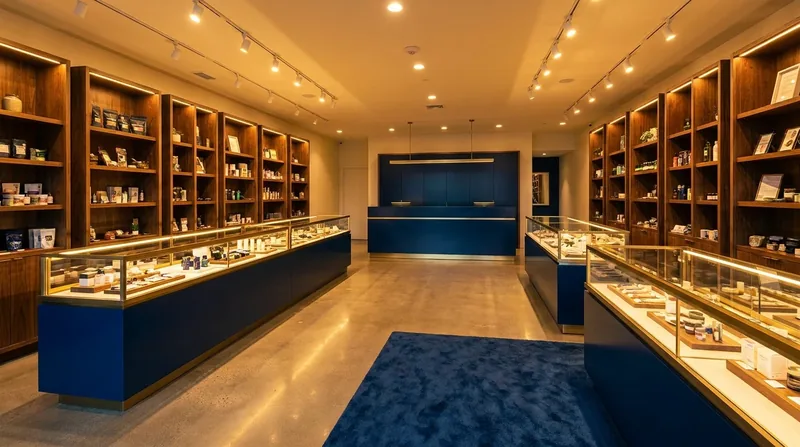
Opening a CBD or Hemp Store in Illinois After the 2026 Delta-8 Ban
Opening a CBD or Hemp Store in Illinois After the 2026 Delta-8 Ban
On June 12, 2026, Illinois Governor signed SB 3222 (P.A. 104-463), fundamentally reshaping the hemp and delta-8 market landscape. If you want to open a CBD or hemp store in Illinois, you need to understand what changed, what's still legal, and what new licenses you need. This guide walks you through the steps to legally launch your business in the post-delta-8 era.
What Changed: Understanding SB 3222 and the Illinois Hemp Act
The 2026 ban is not a complete prohibition on hemp products. Instead, it tightens rules in two phases, effective immediately and then again on November 12, 2026.
Phase 1: Immediate Changes (Effective June 12, 2026)
Products containing more than 0.4 mg of THC or THC-like cannabinoids (including delta-8, THC-P, HHC, and similar compounds) now trigger adult-only sales requirements. Here's what that means for your store:
- You must check ID for anyone under 30 years old.
- Sales are restricted to customers age 21 and older only.
- New labeling rules apply to these products.
- Products must clearly disclose THC and THC-like cannabinoid content on the label.
This phase creates a temporary window. Many operators continue selling delta-8 and similar products if they comply with ID-check and labeling rules. However, if you are planning a new store launch, this window is closing.
Phase 2: The Hard Cutoff (November 12, 2026)
On November 12, 2026, the Illinois Hemp Act replaces the Industrial Hemp Act. From that date forward, intoxicating hemp products (including delta-8, delta-10, THC-P, HHC, and other THC-like cannabinoids) may only be sold through licensed cannabis dispensaries. A general retail store cannot legally sell these products after that date, even with age restrictions.
This is the critical deadline. If you plan to open a store selling hemp flower, delta-8 gummies, or similar intoxicating products, you must obtain a cannabis retail license from the state. The path to that license is lengthy and expensive, outside the scope of this guide.
What Remains Legal: Compliant CBD Products
Non-intoxicating CBD products remain legal to sell in a standard retail store if they meet these strict criteria:
- Total THC content does not exceed 0.4 mg per container.
- No synthesized cannabinoids (all cannabinoids must come from the hemp plant).
- Sourced from federally compliant industrial hemp.
Compliant CBD products include isolated CBD oils, CBD topicals, CBD isolate powders, and similar items derived directly from the plant with no artificial enhancement. These products can be sold in a standard retail environment without a cannabis license.
Deciding Your Business Model
Before you file any paperwork, choose your path:
Option 1: Compliant CBD Retail Store
You source only non-intoxicating CBD products (under 0.4 mg THC per container, no synthesized cannabinoids) and operate as a standard retailer. This path requires only standard business licensing, not a cannabis license. You can open reasonably quickly and at lower cost.
Trade-off: Your product selection is limited. You cannot sell delta-8, hemp flower, or other intoxicating products after November 12. Your market is wellness-focused CBD buyers.
Option 2: Cannabis Retail License (Intoxicating Products)
You pursue a full cannabis retail license to sell intoxicating hemp products and eventual cannabis products. This path requires navigating the Illinois Department of Financial and Professional Regulation, meeting ownership requirements, and competing in the social equity process. It takes months to years and costs tens of thousands in licensing fees, build-out, and compliance.
Trade-off: Higher initial investment and longer timeline, but broader product selection and eligibility for future cannabis sales.
This guide focuses on Option 1, the compliant CBD retail store. If you are pursuing a cannabis license, consult an attorney licensed in Illinois cannabis law.
Step 1: Choose and Register Your Business Structure
Start with the legal foundation. Most retail businesses operate as either an LLC or a corporation.
Limited Liability Company (LLC)
An LLC is simpler to set up and file. You are not personally liable for the business's debts. File Articles of Organization (Form LLC-5.5) with the Illinois Secretary of State for a $150 filing fee (or $250 for 24-hour processing). Processing takes 10 business days for standard service. You will need a registered agent with an Illinois street address.
Corporation
A corporation is more formal and creates a separate legal entity. File Articles of Incorporation (Form BCA 2.10) with the Illinois Secretary of State for a $150 filing fee. A corporation requires a registered agent and a board of directors. Corporations pay the 7% Illinois corporate income tax plus a 2.5% personal property replacement tax.
For most small CBD retailers, an LLC is the simpler choice.
Registering Your Business Name
Choose a business name that is unique and available in the Illinois Secretary of State database. Use the business entity search at https://apps.ilsos.gov/businessentitysearch/ to check availability before filing.
Your LLC or corporation name must include a designator such as "Limited Liability Company," "LLC," or "L.L.C." Your name cannot contain words like "Corporation," "Incorporated," "Inc.," or "Ltd."
If you want your LLC or corporation to operate under a different name, file an assumed name with the Illinois Secretary of State. The fee depends on where you are in the five-year renewal cycle: it ranges from $30 to $150. County clerk filing and newspaper publication apply to sole proprietorships and general partnerships, not to LLCs and corporations.
Step 2: Obtain an Illinois Hemp Cultivation License (If Sourcing Your Own)
If you plan to grow your own hemp for CBD extraction, you need an Illinois Department of Agriculture (IDOA) hemp cultivation license. This is optional if you buy finished CBD products from licensed suppliers.
Hemp Cultivation License Requirements
The IDOA issues hemp cultivation licenses to grow industrial hemp in Illinois. The license fee is in the range of $375 to $1,000 per year. You should confirm the current fee on the IDOA website, as the exact amount is subject to change.
To qualify, you must:
- Provide proof of legal land use (lease or deed).
- Submit a cultivation plan including location, acreage, and variety.
- Agree to comply with federal hemp regulations (less than 0.3% THC in the final plant).
- Allow IDOA inspections of your crop.
- Destroy any plants that test above the 0.3% federal threshold.
Confirm current processing timelines with IDOA when you apply.
Step 3: Obtain a Hemp Processor or Product Manufacturer License
If you are extracting CBD from raw hemp, processing hemp flower, or manufacturing finished CBD products (oils, capsules, edibles, etc.), you need a state license. As of November 12, 2026, the rules are:
Industrial Hemp Processor License
If you are processing raw hemp into intermediate forms (e.g., extracting CBD oil, making hemp paste), you need an Industrial Hemp Processor License. The fee is $200 for a two-year license. You must specify your processing methods and the products you intend to make.
Hemp Product Manufacturer License
If you are manufacturing finished CBD products for retail sale (tinctures, gummies, capsules, topicals, etc.), you need a Hemp Product Manufacturer License. The fee is $5,000 for a two-year license. Your facility must meet food safety and manufacturing standards. You must label products with accurate THC testing results.
If You Are Not Processing or Manufacturing
If you are buying finished, compliant CBD products from licensed suppliers and simply retailing them, you do not need a processor or manufacturer license. You need only your retail business license and IDOR registration.
Step 4: Register with the Illinois Department of Revenue
Illinois does not issue a general statewide retail business license. Instead, register with the Illinois Department of Revenue (IDOR) using Form REG-1. Registration is free and takes 1 to 2 business days online or 4 to 6 weeks by mail.
Register at https://tax.illinois.gov/businesses/registration.html
As a retailer, you will receive a Certificate of Registration. Display this certificate at your place of business. You are now authorized to collect sales tax from customers and remit it to IDOR. Illinois state sales tax is 6.25%, but your local jurisdiction may add additional tax. Confirm your local sales tax rate with IDOR's tax rate lookup in MyTax Illinois.
Step 5: Secure a Local Business Permit
Illinois has no single state business license, but your city or village likely requires a local retail license or permit. Contact your city clerk or village administrator for requirements. Fees and approval times are set locally.
Some municipalities specifically regulate hemp and CBD retail and may impose additional requirements such as:
- Distance restrictions from schools, parks, or other sensitive areas.
- Operating hour restrictions.
- Signage regulations.
- Proof of product testing and compliance documentation.
- Security camera requirements.
Call ahead. A few municipalities have not yet updated their ordinances post-SB 3222, so confirmation prevents costly surprises.
Step 6: Set Up Your Supply Chain and Product Compliance
Sourcing Suppliers
Identify wholesale suppliers of compliant CBD products. Your supplier must provide:
- Third-party lab testing confirming THC content is below 0.4 mg per container.
- A certificate of analysis for each product batch.
- Proof that the hemp source is federally compliant (under 0.3% THC in the plant).
- Documentation that no synthesized cannabinoids were added.
Never buy from suppliers who cannot produce testing documentation. Regulators can hold you responsible for what you sell, whatever the supplier promised.
Labeling and Packaging
Ensure all products you sell have proper labeling that includes:
- Product name and type (e.g., "CBD Oil Tincture").
- Net weight or volume.
- THC content (in mg or percentage, from the lab test).
- CBD content (in mg or percentage).
- Ingredient list.
- Suggested use or serving size.
- Warnings (if applicable, per IDOA rules and FDA guidance).
- Manufacturing and expiration dates.
- Your company name and contact information.
Do not make health claims (e.g., "cures anxiety" or "treats pain") without FDA approval. Adding a standard FDA disclaimer does not make a disease claim acceptable.
Record Keeping
Keep copies of supplier lab tests, purchase orders, and product batches for at least three years. This documentation protects you during regulatory inspections and in case a product question arises.
Step 7: Set Up Point of Sale and Age Verification
Even though November 12 restricts intoxicating products to cannabis licenses, prepare your operation to verify age for products that land near the 0.4 mg THC threshold. Implement:
- A point-of-sale system that flags age-restricted products.
- A staff training protocol requiring ID checks for customers under 30 years old.
- A log of age-verification refusals (recommended, though not legally required for compliant CBD).
Even compliant CBD products are safer positioned with a professional age-check protocol, given regulatory scrutiny around hemp cannabinoids.
Step 8: File Your Tax Registration and Set Aside Sales Tax
Once you register with IDOR, you owe Illinois sales tax on all retail sales. The state tax is 6.25%, plus any local add-ons. Most retailers file sales tax monthly or quarterly. Set aside the tax amount from each sale; never spend it as business revenue. Pay IDOR on the due date or face penalties.
If your LLC is taxed as a partnership, it owes no Illinois income tax at the business level, but it owes the 1.5% personal property replacement tax on its net income. If you elect corporate treatment, you owe the 7% corporate income tax plus the 2.5% replacement tax.
Consult a CPA familiar with Illinois hemp retail taxation. The rules are evolving, and professional guidance is worth the cost.
Timeline and Expected Costs
Months 1-2: Business Formation
- Form LLC or Corporation: 10 business days ($150) or 24 hours ($250).
- Register with IDOR: 1 to 2 business days online, 4 to 6 weeks by mail; free.
- Obtain local business permit: time and fee set locally.
Month 2-3: Licensing and Supplier Setup
- Apply for hemp cultivation license (if needed): fee of roughly $375 to $1,000 (confirm with IDOA).
- Apply for processor or manufacturer license (if needed): $200 (processor) or $5,000 (manufacturer) for two years.
- Identify suppliers and secure supply contracts: ongoing.
Month 3-4: Build-Out and Inventory
- Secure retail location and lease.
- Obtain occupancy permits and build-out approvals.
- Install shelving, lighting, and security cameras.
- Purchase initial inventory from suppliers.
- Set up point-of-sale and age-verification systems.
Total Setup Cost (Compliant CBD Retail Store)
For a basic compliant CBD retail store, without owning cultivation or manufacturing, first-year costs include:
- Business registration and licensing ($150 LLC filing; IDOR registration is free; local fees vary).
- Retail lease deposit and first month's rent.
- Build-out, fixtures, and security.
- Initial inventory (compliant CBD products).
- POS system and age verification.
- Professional services (CPA, attorney consultation).
- Insurance, signage, and miscellaneous.
If you add cultivation or manufacturing, costs rise significantly, starting with the IDOA license fees above.
Common Mistakes to Avoid
Mistake 1: Misunderstanding the November 12 Deadline
Many operators assume they can sell delta-8 indefinitely. They cannot. After November 12, 2026, only licensed cannabis dispensaries can sell intoxicating hemp products. A general retail store that continues selling delta-8 faces enforcement under the new law. If your plan depends on delta-8 sales after November 12, you need a cannabis license, not a retail license.
Mistake 2: Buying from Unverified Suppliers
Low-cost suppliers without lab testing and compliance documentation expose you to legal risk. If regulators find that a product exceeds the 0.4 mg THC limit, you can be held responsible for selling it. Verify every supplier and product with testing documentation before you buy.
Mistake 3: Making Health Claims
The FDA does not recognize CBD as a dietary supplement or medicine (as of 2026). Avoid claims like "relieves anxiety," "helps with pain," or "promotes sleep." Use only neutral language: "CBD isolate," "CBD tincture," or "intended for wellness purposes." Violate this, and you invite FDA warning letters and enforcement action.
Mistake 4: Ignoring Local Regulations
Some Illinois municipalities have banned hemp retail or imposed strict distance and operational rules. A $50,000 lease means nothing if your city council votes to ban your business type after you sign. Call your city clerk before you commit to a location.
Mistake 5: Neglecting Age Verification and Record Keeping
Train your staff on age checks and ID policies from day one. Even if your products are compliant, looking like you are serious about age restrictions protects you from future regulatory changes and demonstrates good-faith compliance.
Expected Results and Timeline to Opening
Assuming no complications and compliant-CBD-only focus, you can open a basic retail store in 3 to 4 months from business formation to grand opening. The fastest path: register your LLC, secure a location, obtain local permits, buy compliant inventory, and open. The rate-limiting factor is typically your retail lease negotiation and build-out time, not regulatory approvals.
However, expect delays if your municipality requires additional hemp retail permits, if your location triggers historic-district or zoning reviews, or if you operate in a larger city (Chicago, Aurora, Naperville) with slower permitting timelines. Budget an extra 4 to 8 weeks in urban areas.
By November 12, 2026, your operation must be positioned to sell only compliant products. Any intoxicating hemp products must be sold off or removed before that date. Plan your initial inventory with that deadline in mind.
Final Recommendation: Consult Professionals
This guide covers the statutory basics of opening a compliant CBD retail store in Illinois post-SB 3222. However, hemp and CBD regulations are evolving. Your city's local ordinance may impose requirements not covered here. Your accounting may involve details beyond scope. Before you commit substantial capital, consult:
- An Illinois-licensed attorney: Verify your business structure choice, local compliance requirements, and product liability exposure. Many offer free 30-minute consultations.
- A CPA experienced in hemp retail: Confirm your tax treatment, sales tax obligations, and record-keeping requirements.
- Your city or village clerk: Confirm whether your location permits hemp retail and what local permits apply.
- Your supplier: Verify that every product meets the 0.4 mg THC-per-container limit with current lab testing.
This content is informational and not legal, tax, or regulatory advice. The rules you operate under are yours to verify and comply with. When in doubt, ask the experts.
Key Resources
- Illinois Secretary of State Business Services: https://www.ilsos.gov/departments/business-services.html
- Illinois Department of Revenue: https://tax.illinois.gov/
- Illinois Department of Agriculture Hemp Program: https://agr.illinois.gov/
- Illinois Department of Financial and Professional Regulation (dispensary licensing): https://idfpr.illinois.gov/
Keep exploring: related Illinois guides
- How to Get a Video Gaming License in Illinois
- How to Open a Pawn Shop in Illinois Under the 2024 Pawnbroker Act
- How to Get a Car Dealer License in Illinois
- How to Open a Vape or Tobacco Shop in Illinois
- How to Start an LLC in Illinois
- Illinois Business License
- How Much Does It Cost to Start a Business in Illinois
- All Illinois business types
- Every Illinois guide in one place