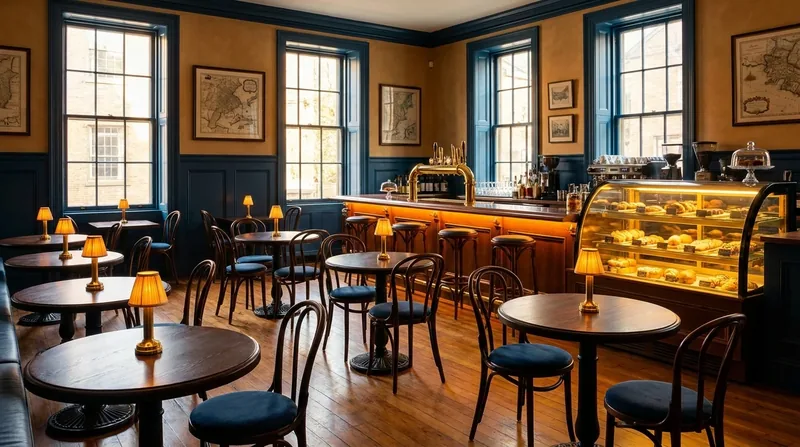
How to Open a Restaurant in Illinois: Health Permits, Food Manager Rules and Liquor
How to Open a Restaurant in Illinois: Health Permits, Food Manager Rules and Liquor
Opening a restaurant in Illinois requires navigating multiple state and local requirements. Before your first customer walks through the door, you'll need a health department permit, trained food handlers, a Certified Food Protection Manager on staff, and, if you plan to serve alcohol, a liquor license. Illinois adopted the 2022 FDA Food Code statewide, making compliance clear and consistent, but the permits come from your local health department, not a single state agency.
This guide walks you through each requirement, the exact timeline, costs where applicable, and how to avoid the most common missteps.
What You'll Need Before You Start
Before you begin the permitting process, have these items ready:
- Business structure decision: LLC, C Corporation, S Corporation, or sole proprietorship (affects tax treatment and liability)
- Registered agent and location: An Illinois resident or registered business entity and your restaurant location address
- Operational plan: Menu type, seating capacity, hours, and any alcohol service (beer, wine, spirits, or none)
- Facility diagram: Floor plan showing kitchen layout, storage, and restroom locations (your local health department will specify details)
- Food source documentation: Names and addresses of suppliers, especially for high-risk items like meat and seafood
- Staff contacts: At least one person identified to pursue Certified Food Protection Manager training
- Proof of identity: Driver's license or state ID for all owners and the designated CFPM candidate
The Illinois Restaurant License Process: Step by Step
Step 1: Register Your Business with the Illinois Secretary of State
You cannot apply for a health permit without a registered business. Illinois requires all restaurants to be registered as a legal entity with the Secretary of State unless you operate as a sole proprietor.
If you choose an LLC: File Articles of Organization (Form LLC-5.5) at apps.ilsos.gov/llcarticles. The filing fee is $150 for 10 business day processing, or $250 for 24-hour expedited service.
If you choose a Corporation: File Articles of Incorporation (Form BCA 2.10) at the same portal. The filing fee is also $150 for standard service.
If you operate as a sole proprietor: Skip this step but know that you'll file an Assumed Business Name with your county clerk if you operate under a name other than your legal name.
You'll also need to appoint a Registered Agent: an individual resident of Illinois or an Illinois-registered business entity. Your registered office address must have a street address (no P.O. Box alone). This is where the Secretary of State will mail all official correspondence.
Timeline: 10 business days standard, or 1 business day expedited.
Step 2: Obtain Your Local Health Department Food Service Permit
This is your critical first permit. Illinois adopted the 2022 FDA Food Code statewide, but permits are issued and inspected by certified local health departments. There is no single state-level restaurant license. About 97 local health departments across Illinois handle food service permitting. Verify the exact number and which department covers your location by contacting the Illinois Department of Public Health at dph.illinois.gov.
Contact your local health department (usually the city or county health office where your restaurant will be located). You'll need to:
- Submit a food service permit application. Each local department has its own form, but all require: your business name and address, ownership structure, description of operations (fast casual, full service, catering, etc.), menu type (meat-heavy, vegetarian, seafood-focused, etc.), and the name of your designated Certified Food Protection Manager.
- Provide facility plans. Submit a floor plan showing the kitchen layout, food storage areas, handwashing stations, and restroom locations. The health department will review this to ensure code compliance (three-compartment sinks, hot water availability, proper ventilation, etc.).
- List your suppliers. Identify where you'll source meat, produce, dairy, and other high-risk foods. You must use licensed suppliers. Backyard chickens or unlicensed foraging will not meet code.
- Identify your CFPM. Provide the name of the person who will complete Certified Food Protection Manager training (see Step 3 below).
- Schedule a pre-opening inspection. Before you open, the health department will conduct an unannounced or scheduled inspection to verify that your facility meets the 2022 FDA Food Code as adopted in Illinois. Do not begin food service until you pass this inspection and receive your permit.
Cost: Local health departments set their own fee structure. Costs typically range from $200 to $500 annually, depending on your facility size and type of service. Confirm the exact fee with your local department.
Timeline: 3 to 8 weeks from application to inspection, assuming your facility is ready. Delays occur if the health department identifies code violations during the pre-opening inspection.
Step 3: Obtain Certified Food Protection Manager Certification
Illinois law (410 ILCS 625/3) requires food service establishments to have at least one Certified Food Protection Manager on staff. This person must complete an accredited CFPM course and pass a national exam (ServSafe, National Registry of Food Safety Professionals, or equivalent).
Your designated CFPM must:
- Complete a food safety course. Enroll in an accredited Certified Food Protection Manager course. Options include ServSafe (most common), offered online or in-person at community colleges or via private vendors. The course typically takes 8 to 16 hours.
- Pass the certification exam. After coursework, take the certification exam. Exams are offered online or at testing centers, and the fee and passing score are set by the exam provider.
- Keep your certificate current. Most CFPM certifications are valid for 5 years. After that, your CFPM must recertify or take a renewal course.
Additional requirement (within 30 days): Your Certified Food Protection Manager must also complete allergen awareness training as required by 410 ILCS 625/3.07. This covers the major food allergens (milk, eggs, fish, crustaceans, tree nuts, peanuts, wheat, soybeans and sesame) and how to prevent cross-contamination. Most allergen courses are brief (1 to 2 hours) and are offered online by the same vendors that provide CFPM training.
Cost: $135 to $200 for the CFPM course and exam, plus $25 to $75 for allergen training.
Timeline: 1 to 4 weeks to complete the course and exam, depending on your enrollment date and exam availability.
Step 4: Ensure All Food Handler Staff Complete Training
Beyond your CFPM, every employee who handles food, prep, cooking, serving, or cleanup, must complete food handler training within 30 days of hire and renew it every 3 years per 410 ILCS 625/3.06.
Food handler training is different from CFPM certification. It is a shorter course (typically 1 to 2 hours) that covers the basics: handwashing, time and temperature control, cross-contamination prevention, and when to report illness.
You can:
- Use an accredited online food handler training vendor (such as ServSafe)
- Arrange in-person training through your local health department or a community college
- Print certificates for your records once employees pass the test
Keep copies of all food handler certificates on file at your restaurant. Health inspectors will ask to see them. Failure to provide proof of training can result in fines or violations on your health inspection report.
Cost: $10 to $20 per employee per training.
Timeline: 2 to 5 hours per employee (most complete it online before their first shift).
Step 5: Obtain a Local Liquor License (If Serving Alcohol)
If you plan to serve beer, wine, or spirits, you must first obtain a local liquor license from your city or county, then get a state retailer license from the Illinois Liquor Control Commission (ILCC).
Step 5A: Apply for Local Liquor License
Your local municipality (city or village) issues the first license. Each jurisdiction has different requirements, fees, and approval timelines. Some areas are "dry" (no alcohol sales permitted) or have moratoriums on new licenses. Before you plan to serve alcohol, confirm that your location is in a wet zone and that new licenses are available.
To apply:
- Contact your city or village clerk's office
- Request a local liquor license application (often called an "On-Premises" or "On-License" for restaurants serving alcohol to guests)
- Provide: proof of business registration, lease or deed for the location, local health permit, your CFPM certificate, proof of liability insurance (usually required), and proof of any required distance from schools or daycare centers (varies by locality)
- Pay the local license fee (set by each municipality; Chicago, for example, charges $4,400 for a two-year Consumption on Premises Incidental license)
- Attend a public hearing if required by your municipality (some areas require a public hearing; others do not)
Timeline: 4 to 12 weeks (local approval is slower and may require a hearing).
Step 5B: Get Your State License from the Illinois Liquor Control Commission
Once you have your local license, you must apply for a state retailer license from the ILCC. Do not skip this step. Serving alcohol without the state license is a violation.
Submit:
- Your local liquor license (copy)
- A completed ILCC retailer license application
- Proof of ownership or a lease
- Proof of liability insurance
Illinois uses dual licensing: you need both the local license and the ILCC state retailer license, which costs $750 initially and $600 to renew (235 ILCS 5/5-3). You can apply online at the ILCC website or by mail.
Cost: Local fees vary by municipality; the ILCC retailer license is $750 initial and $600 renewal (confirm current fees at ilcc.illinois.gov).
Timeline: 2 to 4 weeks from local approval to the ILCC state license.
Step 6: Register with the Illinois Department of Revenue
All restaurants must register with the Illinois Department of Revenue to collect and remit sales tax. Illinois has a 6.25% state sales tax (local taxes are added on top; Chicago's combined general rate is 10.5% from August 1, 2026). You'll also collect state and federal income taxes from employee payroll.
Register online through MyTax Illinois:
- Go to tax.illinois.gov/businesses/registration
- Fill out Form REG-1 (free and online)
- Provide your business registration number, location, ownership structure, and estimated monthly revenue
- You'll receive a Certificate of Registration (retailers must display this at the point of sale)
Cost: Free.
Timeline: 1 to 2 business days online; 4 to 6 weeks by mail.
Tips and Common Mistakes to Avoid
- Don't skip the CFPM. Every restaurant must have a Certified Food Protection Manager on staff before opening. Hiring someone and then sending them for training after you open puts you in violation. Get the certificate first.
- Verify your local health department's specific requirements. While Illinois statewide adopted the 2022 FDA Food Code, local health departments may have additional local rules. Call ahead and ask for a copy of any local amendments or supplemental rules.
- Plan for the pre-opening inspection timeline. The health department inspection can take weeks to schedule, and violations discovered during inspection can delay your opening by months if you need to renovate. Budget extra time.
- Collect food handler certificates from day one. Do not let employees work without proof of training. Keep hard copies and digital files organized. Inspectors will ask to see them, and missing certificates can result in fines.
- Check your liquor license zone before leasing. Some areas do not allow new liquor licenses, or they are restricted to specific neighborhoods. Confirm this before signing a lease.
- Obtain liability insurance before applying for a liquor license. Most local governments require proof of liability insurance (typically $1 million or $2 million coverage) before issuing a liquor license. Shop for this early.
- Don't assume your food supplier is licensed. Verify that every meat, produce, and dairy supplier is licensed by the state or federal government. Using unlicensed suppliers is a code violation and a health risk.
Expected Timeline and Results
From start to finish, opening a restaurant in Illinois typically takes 4 to 6 months if everything goes smoothly. Here's a realistic timeline:
| Task | Typical Duration |
|---|---|
| Business registration (LLC/Corporation) | 10 business days to 1 day (expedited) |
| CFPM course and certification | 2 to 4 weeks |
| Allergen awareness training (CFPM) | 1 to 2 hours |
| Health department permit application review and pre-opening inspection | 3 to 8 weeks |
| Local liquor license approval (if applicable) | 4 to 12 weeks |
| ILCC state retailer license (if applicable) | 2 to 4 weeks |
| Illinois Department of Revenue registration | 1 to 2 business days (online) |
| Total | 4 to 6 months |
The longest wait is usually the health department inspection. If violations are found, add 2 to 4 weeks for corrections and re-inspection.
What Success Looks Like
After you complete these steps, you should have:
- A registered business entity with the Illinois Secretary of State
- A local health department food service permit
- A Certified Food Protection Manager on staff with current certification
- All food handler staff trained with certificates on file
- A local liquor license and ILCC state retailer license (if serving alcohol)
- A Certificate of Registration with the Illinois Department of Revenue
- Proof of passed health department inspection
From this point forward, you'll need to renew your health permit annually (fee set locally), renew CFPM certification every 5 years, ensure food handler staff renew training every 3 years, and renew your liquor license annually (local or state, depending on type).
Disclaimer
This article provides informational guidance on Illinois restaurant licensing requirements based on state law and the 2022 FDA Food Code as adopted in Illinois. It is not legal or tax advice. Restaurant licensing involves complex local regulations that vary by city and county, and requirements may change. Before opening a restaurant, consult a qualified attorney licensed in Illinois and a certified public accountant (CPA) familiar with food service businesses. Confirm all fees, timelines, and requirements with your local health department, city clerk, and the Illinois Department of Revenue. You are responsible for verifying compliance with all applicable laws.
Keep exploring: related Illinois guides
- How to Open a Restaurant in Chicago
- How to Start a Bakery Business in Illinois
- How to Get a Liquor License in Illinois
- How to Start a Brewery, Winery or Distillery in Illinois
- How to Start an LLC in Illinois
- Illinois Business License
- How Much Does It Cost to Start a Business in Illinois
- All Illinois business types
- Every Illinois guide in one place