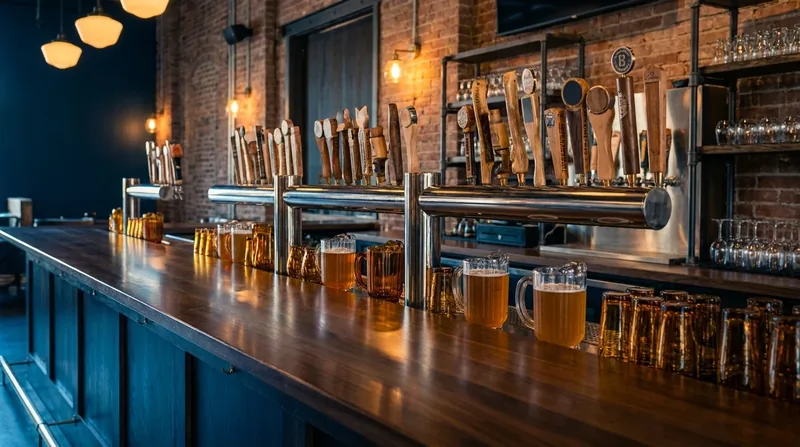
How to Start a Brewery, Winery or Distillery in Illinois: ILCC Manufacturer Licenses
How to Start a Brewery, Winery or Distillery in Illinois: ILCC Manufacturer Licenses
Opening a brewery, winery, or distillery in Illinois requires both federal and state licensing. The state governs manufacturer licenses through the Illinois Liquor Control Commission (ILCC), but you'll need to start with a federal permit from the Alcohol and Tobacco Tax and Trade Bureau (TTB) before you apply for any state license. This guide walks you through the exact steps, fees, and production caps for each type of manufacturer license available in Illinois.
The process is linear: federal permit first, then Illinois state license, then local approval. Each step has specific requirements and timelines you need to understand before you commit resources to the business.
License Types and Fees at a Glance
Illinois offers multiple manufacturer license categories depending on what you produce and your intended scale. Here's the breakdown of state ILCC license types and fees under 235 ILCS 5/5-3:
| License Type | Applicability | State Fee | Production Cap |
|---|---|---|---|
| Class 1 Brewer | Small breweries | $75 | 930,000 gallons per year |
| Brewer License | Brewery producing beer | $1,500 | No cap |
| Brewpub License | On-premises brewery and restaurant | $1,500 | 155,000 gallons per year |
| First-Class Wine Manufacturer | Wine production | $900 | Sales to wholesalers up to 50,000 gallons per year |
| Limited Wine Manufacturer | Small-scale winery | $350 | 40,000 gallons per year |
| Craft Distiller | Base license, held with a Class 1 or Class 2 license | $2,500 | Set by the Class 1 or Class 2 license |
| Class 1 Craft Distiller | Small distillery | $75 | 50,000 gallons per year |
| Class 2 Craft Distiller | Larger craft distillery | $100 | 100,000 gallons per year |
| Distilling Pub | On-premises distillery and bar | $1,500 | 5,000 gallons per year |
The choice of license depends on your production volume, whether you'll sell on or off premises, and the type of beverage you manufacture. Class 1 licenses are ideal for small operations that want to stay under production caps at the lowest cost. Standard manufacturer licenses and pub licenses support higher volumes or on-premises service.
Step 1: Obtain Your Federal TTB Permit (Required First)
You cannot legally produce any beer, wine, or spirits without federal authorization from the Alcohol and Tobacco Tax and Trade Bureau (a Brewer's Notice for breweries, or a basic permit and bonded premises registration for wineries and distilled spirits plants). This step happens before you touch state licensing. The TTB is part of the U.S. Department of the Treasury and has authority over all alcohol production in the United States, regardless of state license status.
Here's what you need to do:
- Register with TTB Online. Go to ttb.gov and create an account in the TTB online portal. You'll need a Federal Employer Identification Number (EIN) from the IRS, so apply for that first if you don't have one.
- Prepare your Permit Application. The form depends on your product type. Breweries file a Brewer's Notice. Wineries and distilleries apply for a federal basic permit and register their bonded winery or distilled spirits plant. TTB's Permits Online system selects the right forms for your business type.
- Describe Your Facility and Process. The TTB needs detailed information about your production method, equipment, storage, safety measures, and how you'll track inventory. For breweries, this includes fermentation tanks and conditioning methods. For wineries, it includes crushing equipment and aging processes. For distilleries, it includes stills and distillation methods.
- Provide Proof of Ownership or Lease. TTB requires documentation that you own or control the production premises. A lease agreement or deed works.
- Submit and Wait. Processing takes 30 to 60 days on average. The TTB may request additional information or conduct a site visit before approval.
- Receive Your Permit Number. Once approved, the TTB issues your permit and assigns a unique permit number. This number appears on all your ILCC applications and is your federal authorization to produce.
Do not begin production before the TTB approves your permit. Federal violations carry substantial penalties and can disqualify you from future licensing.
Step 2: Choose Your Illinois License Type Based on Your Business Model
With your federal TTB permit in hand (or in progress), determine which ILCC license fits your operation. Your decision depends on three factors: what you produce (beer, wine, spirits), your expected annual production volume, and whether you'll sell on premises (at a taproom or bar) or off premises only (wholesale to retailers).
For a brewery: A production brewery holds the base Brewer license ($1,500). A Class 1 Brewer license ($75), which can only be issued to a licensed brewer, allows up to 930,000 gallons a year, and a Class 2 Brewer license ($100) allows up to 3,720,000 gallons. A Brew Pub license ($1,500) is a separate option for a restaurant or taproom that brews on site, with a 155,000-gallon annual cap. Ask the ILCC which retail license a production brewery needs for on-site taproom sales.
How to start a brewery in Illinois typically means a Brewer license plus a Class 1 Brewer license, since the Class 1 license is issued only to licensed brewers and covers up to 930,000 gallons a year.
For how to start a winery in Illinois: Choose First-Class Wine Manufacturer ($900), which allows sales and deliveries of up to 50,000 gallons of wine a year to manufacturers and distributors (larger wineries need a second-class wine manufacturer license), or Limited Wine Manufacturer ($350) if you will not exceed 40,000 gallons per year. Limited licenses are cost-effective for small operations and still qualify you as an Illinois winery.
For how to start a distillery in Illinois: Craft distillers have more defined classes. Class 1 Craft Distiller ($75) caps production at 50,000 gallons per year. Class 2 Craft Distiller ($100) permits up to 100,000 gallons per year. Each Class 1 or Class 2 license is issued only to a licensed craft distiller, so you also hold the base Craft Distiller license ($2,500). A Distilling Pub license ($1,500) is a separate option for a bar or restaurant that distills up to 5,000 gallons a year on site.
Step 3: Apply for Your Illinois ILCC Manufacturer License
With your TTB permit approved, submit your application to the Illinois Liquor Control Commission. The ILCC processes manufacturer licenses under the authority of 235 ILCS 5/5-3.
- Complete the Manufacturer Application. Contact the ILCC or visit the ILCC website to obtain the current application form for your license type (brewer, winery, or distiller). Application requirements vary by type, but all require your TTB permit number, facility address, production method description, and proof of ownership or control of the premises.
- Include Your TTB Permit Number and Copy. Attach a copy of your approved TTB permit to the ILCC application. Without this, the ILCC will not process your request.
- Provide Operating Plan Details. Describe how you'll store inventory, prevent spoilage or contamination, track production volume, and maintain safety. The ILCC wants to ensure you understand the production process and have adequate controls in place.
- Pay the State License Fee. Submit payment with your application. Fees range from $75 (Class 1) to $2,500 (Craft Distiller), payable by check or electronic transfer as the ILCC instructs.
- Submit the Application. Deliver the completed application and supporting documents to the Illinois Liquor Control Commission at their office address or online portal if available. Confirm the current submission method with the ILCC directly before sending.
- Allow 15 to 30 Days for Review. The ILCC reviews applications for completeness and compliance. If the application is incomplete, they will request additional information. Processing time varies, so ask the ILCC for its current timeline.
- Receive Your ILCC License. Once approved, the ILCC issues your state manufacturer license, usually as a printed certificate or digital authorization. Your license becomes valid on the date issued.
Keep your ILCC license posted visibly at your production facility. Federal and state inspectors will ask to see it during routine audits.
Step 4: Obtain Local Approval
Many Illinois municipalities and counties require an additional local license or permit for alcohol manufacturing, even after you hold federal and state authorizations. Requirements vary by location.
- Check Your Local Municipality. Contact the city or village clerk's office where your brewery, winery, or distillery will operate. Ask whether a local license is required for alcohol manufacturers.
- Apply for Local License if Required. If your municipality requires one, submit an application to the local licensing authority. Fees are set by the municipality.
- Attend a Public Hearing if Required. Some municipalities hold hearings for manufacturer licenses, especially if they involve on-premises service. Attend and be prepared to discuss your operation, noise mitigation, and community benefit.
- Receive Local Approval. Once the municipality approves, you hold all three required authorizations: federal TTB permit, Illinois ILCC license, and local license (if applicable).
Before you invest in a facility, confirm the local licensing requirement and fee with the city or county. Some communities actively support breweries and distilleries; others are restrictive.
What You'll Need Before You Start Production
- Facility and Equipment: A dedicated production space with appropriate fermentation, aging, or distillation equipment. The equipment must meet TTB and ILCC standards for sanitation and volume tracking. For breweries, this includes fermentation vessels, conditioning tanks, and filtration. For wineries, it includes crushers, presses, and barrels. For distilleries, it includes stills, condensers, and collection vessels.
- Raw Materials Sourcing: Identify suppliers for malts, grains, hops, yeast (breweries); grapes or other fruits, yeast, aging containers (wineries); grains, yeast, and water (distilleries). Establish relationships with reliable suppliers before you need them at scale.
- Testing and Quality Control: Set up a system to test pH, alcohol content, specific gravity, and contamination. Many operations use a lab or send samples to a third-party testing facility.
- Records and Inventory Tracking: The TTB requires detailed production records: batches produced, ingredients used, volumes stored, volumes sold, and waste. Keep these records for at least three years, or longer if TTB requires.
- Insurance: Obtain product liability and general liability insurance. Most insurers require proof of your TTB permit and ILCC license before they issue a policy.
- EIN and Tax Registration: An EIN from the IRS (needed for the TTB permit). State tax registration with the Illinois Department of Revenue for sales and excise taxes.
Tips and Common Mistakes to Avoid
- Don't Start Production Before TTB Approval. Producing alcohol without a federal permit is illegal, even if your ILCC license is approved. Wait for both authorizations.
- Verify Your Production Cap. If you hold a Class 1 license or other capped license, track your gallons against the annual limit. Exceeding your cap violates your license. Many operations underestimate production and exceed their cap mid-year. Use conservative estimates when choosing your license type.
- Keep Accurate Records from Day One. The TTB and Illinois auditors expect detailed records. Poor record-keeping is a common violation. Set up a system before production starts, not after.
- Understand Your License Scope. A Brewer license authorizes you to produce beer; confirm with the ILCC which retail license you need to serve beer on premises. A Brewpub license does not authorize off-premises sales to retail stores. Know exactly what your license permits.
- Confirm Local Requirements Early. Some locations restrict new distilleries or require special permits. Verify local zoning and licensing before you sign a lease or invest in equipment.
- Prepare for Excise Taxes. Manufacturers owe federal excise tax to the TTB on alcohol sold (for beer, $3.50 per barrel on a small domestic brewer's first 60,000 barrels and $18 per barrel at the standard rate, with separate rates for wine and spirits). Budget for these taxes; they're substantial and due on a regular schedule, not at year-end.
- Plan for Recurring ILCC Renewal. Your ILCC license is not perpetual. Manufacturer licenses renew annually, and renewal fees are set in 235 ILCS 5/5-3 and are usually lower than initial fees (for example, $2,000 versus $2,500 for a craft distiller). Mark renewal dates in your calendar; missing a renewal can lapse your license.
Timeline and What to Expect
The full process from application to production typically takes 4 to 6 months, though it varies by complexity.
- Weeks 1 to 2: Obtain your EIN, identify a facility, and prepare your TTB application.
- Weeks 3 to 8: Submit and wait for TTB approval (4 to 6 weeks typical). The TTB may request additional information or a site visit, which can extend this.
- Week 9: Once the TTB approves your federal permit, submit your ILCC application with the permit copy.
- Weeks 10 to 13: Wait for ILCC approval (2 to 4 weeks typical). The ILCC may approve immediately or request clarifications.
- Week 14: Apply for local license (if required). Local processing takes 1 to 4 weeks.
- Week 18+: Once all approvals are in hand, set up your facility, purchase equipment, order raw materials, and begin production.
Some applications move faster, especially if you provide complete information on the first submission and your facility is already in compliance. Incomplete applications or site issues can extend the timeline to 8 to 12 months.
Disclaimer
This article is informational and explains the general process for obtaining Illinois manufacturer licenses for breweries, wineries, and distilleries. It is not legal or tax advice. Alcohol licensing involves complex federal and state regulations, local rules that vary by municipality, and tax obligations that depend on your specific business structure. Before you apply, consult with an attorney licensed in Illinois who specializes in alcohol beverage licensing, and consult a CPA who understands federal excise taxes and state manufacturer obligations. Requirements and fees change; verify current information directly with the TTB at ttb.gov and the Illinois Liquor Control Commission before you submit applications.
Keep exploring: related Illinois guides
- How to Start a Bakery Business in Illinois
- How to Start a Catering Business in Illinois
- How to Open a Restaurant in Illinois
- How to Start a Coffee Shop Business in Illinois
- How to Start an LLC in Illinois
- Illinois Business License
- How Much Does It Cost to Start a Business in Illinois
- All Illinois business types
- Every Illinois guide in one place