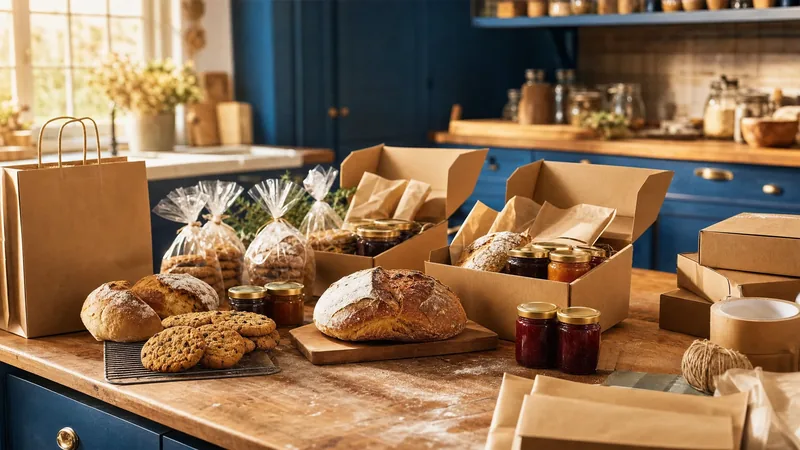
How to Start a Cottage Food Business in Illinois Under the Home-to-Market Act
How to Start a Cottage Food Business in Illinois Under the Home-to-Market Act
Illinois law now makes it possible to run a food business from your home kitchen, thanks to the Home-to-Market Act (P.A. 102-0633). If you make jams, baked goods, pickles, or other shelf-stable foods, you can legally sell them directly to customers without renting commercial kitchen space. This guide walks you through exactly what you need to do to start a cottage food business in Illinois legally.
What Is the Illinois Home-to-Market Act?
The Illinois Home-to-Market Act, which took effect on January 1, 2022, expanded the state's cottage food operation law (410 ILCS 625/4). It is separate from the older home kitchen operation exemption (410 ILCS 625/3.6), which covers only non-potentially hazardous baked goods, caps sales at $1,000 a month and applies only where the local government has adopted an ordinance allowing it. This law lets you manufacture certain foods in your home kitchen and sell them directly to consumers without a commercial kitchen license. It replaced the old farmers-market-only rule and eliminated the $36,000 annual sales cap that once limited cottage food operations.
Under the home to market act Illinois allows you to make money from food you produce at home, with one key requirement: you must be registered with your local health department and hold a Certified Food Protection Manager certificate.
Who Can Run a Cottage Food Business in Illinois?
To operate a cottage food operation in Illinois, you must meet these basic requirements:
- Use the kitchen in your primary residence (or an appropriately equipped farm kitchen) in Illinois
- Live in the county or city where you plan to register (local registration is required)
- Commit to obtaining a Certified Food Protection Manager certificate
- Follow all recipes and food handling rules set by your local health department
You do not need to hold a commercial food license, rent a shared kitchen, or operate out of an inspected facility. The cottage food law covers you, provided you follow the cottage food illinois registration process in your jurisdiction.
Step 1: Check Your Local Cottage Food Registration Requirements
Registration for a cottage food business in Illinois happens at the local level, not the state level. Each county and city health department sets its own rules, fees, and application process. The state caps the registration fee at $50, but your local department may charge less.
Start by finding your local health department. Search "[your city] health department" or "[your county] health department" online. Most registrations go through county health departments, and a few cities, including Chicago, Evanston, Oak Park and Skokie, run their own health departments.
Contact them directly and ask:
- What foods can I make under the home to market act Illinois exemption?
- What is the registration fee for a cottage food operation?
- What forms do I need to complete for cottage food illinois registration?
- Are there any other local permits or licenses required?
- How long does the registration process take?
The registration fee is capped at $50 by state law (410 ILCS 625/4), though some local health departments may charge less. For example, Oak Park has been reported to charge $25 and Vermilion County $50. Verify the exact fee with your local department before you apply.
Step 2: Determine Which Foods You Can Make
Not all foods qualify under the illinois cottage food law. State law lists the foods you cannot sell (410 ILCS 625/4(b)(1.5)) rather than an approved list, so generally, cottage food operations can produce:
- Baked goods (breads, cookies, cakes, pastries without cream cheese or potentially hazardous fillings)
- Jams, jellies, and preserves
- Pickles and fermented vegetables
- Dried herbs and spices
- Dried pasta and noodles
- Granola and dry cereals
- Roasted coffee beans
- Homemade candy and confections
- Vinegars and vinegar-based products
- Certain sauces and condiments (non-potentially hazardous)
Foods on the statute's prohibited list are not allowed, including meat, poultry and fish, low-acid canned foods (like canned soups), cheesecakes, custard, creme, pumpkin and sweet potato pies, sprouts, cut leafy greens, kombucha and alcoholic beverages. Dairy and eggs are allowed only as ingredients in foods that do not need time or temperature control, such as baked goods, candy or buttercream frosting.
Your local health department will confirm which specific products you can legally make before you register. Do not assume a food is allowed just because it seems shelf-stable. Always get written confirmation from your local health department that your intended product qualifies under the illinois cottage food requirements.
Step 3: Complete the Certified Food Protection Manager Certificate
This is a critical step that many people overlook. The illinois cottage food law requires that anyone managing a home kitchen operation hold a Certified Food Protection Manager (CFPM) certificate, not just a basic food handler certificate. These are two different credentials.
To get your CFPM certificate, you must:
- Complete a Food Protection Manager course approved by the Illinois Department of Public Health or your local health department
- Pass the certification exam (a proctored test, usually multiple choice)
- Obtain your certificate, which is typically valid for 5 years
You can take the course online or in person. Many community colleges, the University of Illinois Extension, and private training vendors offer Illinois-approved courses. The cost typically ranges from $75 to $150, and the exam itself costs $15 to $50 depending on the testing organization.
This certificate must be on file with your local health department when you register, and you may need to display it in your home kitchen. Do not confuse this with a basic food handler certificate, which is not sufficient for cottage food illinois operations.
Step 4: Prepare Your Home Kitchen
Before you register, your kitchen should meet basic sanitation and safety standards. Routine inspections are not required: state law lets the health department inspect after a complaint, an illness outbreak or a suspected hazard, and departments may use a self-certification checklist. Prepare by:
- Ensuring your kitchen is clean and well-organized
- Keeping food preparation surfaces sanitized and separate from non-food items
- Having separate cutting boards or surfaces for different food types
- Installing handwashing facilities with hot and cold running water, soap, and paper towels
- Keeping a thermometer for checking food temperatures
- Maintaining a pest-control-free environment (no rodents, insects, or contamination)
- Using approved food-grade containers and utensils
- Labeling all finished products with required information
Your kitchen does not need to be commercial grade, but it must be safe and meet health codes. Ask your local health department what specific requirements apply to your home kitchen operation.
Step 5: Complete the Registration Application
Once you have your CFPM certificate, contact your local health department to apply for cottage food registration. In most cases, you will need to:
- Complete the cottage food operation registration form (your local department will provide this)
- List the specific foods you plan to make (be detailed about recipes and ingredients)
- Provide proof of your CFPM certificate
- Pay the registration fee (up to $50 by state law)
- Allow time for review or inspection of your kitchen
Processing times vary by location. Some health departments process applications within one to two weeks, while others may take three to four weeks. Contact your local department to understand their timeline and get a written confirmation of your registration date.
In Chicago, you register through the Chicago Department of Public Health (CDPH) Cottage Food Registration. Note that food production cannot be classified as a home occupation in Chicago, so you must file the cottage food registration, not a home occupation license.
Step 6: Create Product Labels and Documentation
Every packaged product you sell must have a label that includes:
- The name of your cottage food operation and the unit of local government where it is located
- The registration number from your health department certificate and the municipality or county where you registered
- The statement: "This product was produced in a home kitchen not inspected by a health department that may also process common food allergens. If you have safety concerns, contact your local health department."
- Product name and ingredients (in descending order by weight)
- Net weight or volume
- Allergen warnings if applicable (nuts, sesame, etc.)
- The date the product was processed
- Any other disclaimers required by your local health department
Keep detailed records of everything you make: ingredients, quantities, dates, batch numbers, and where you sold each batch. This documentation protects you and demonstrates compliance with food safety rules.
Step 7: Decide How to Sell Your Products
Under the home to market act illinois, you can sell directly to consumers through many channels:
- Farmers markets and farmers market events
- Community events and festivals
- Online sales (through your own website or social media)
- Home pickup (customers come to your home)
- Third-party pickup (local coffee shop, bookstore, etc.)
- Delivery (you deliver to customers)
- Mobile markets (you travel to neighborhoods)
The old rule that limited sales to farmers markets only has been eliminated. You have no annual sales cap under the current illinois cottage food law, so you can scale up as much as you want, provided you maintain compliance with registration and food safety rules.
However, you cannot sell to restaurants, stores, or other businesses for resale. Your sales must be direct to the end consumer.
Tips to Avoid Common Mistakes
Cottage food entrepreneurs in Illinois often make these preventable errors:
- Confusing food handler and CFPM certificates. The illinois cottage food requirements specifically demand a Certified Food Protection Manager certificate, not a basic food handler card. Many people obtain the wrong credential.
- Making prohibited foods. Items on the statute's prohibited list (meat, poultry, fish, cheesecake, custard and creme pies, low-acid canned foods and others) are not allowed. Dairy and eggs are allowed only as ingredients in foods that do not need time or temperature control.
- Selling to restaurants or stores. Direct consumer sales only. If a restaurant wants to buy from you, you need a commercial license, not a cottage food registration.
- Assuming one local rule applies statewide. Each county and city has different rules, fees, and approved food lists. Never assume your neighbor's city allows what yours does.
- Failing to label products correctly. Improper labeling is a common violation. Include your operation name and location, registration number, ingredients, allergens, processing date and the required home kitchen statement on every product.
- Operating without registering. Registration is required annually, and fees must be paid. Do not assume you can operate informally or skip the registration step.
- Not keeping records. Document every batch you make, including ingredients, dates, and where you sold it. These records protect you in case of a complaint.
What to Expect After Registration
Once you are registered and operating a cottage food business in Illinois, your local health department may:
- Require annual renewal of your registration and payment of the annual fee
- Inspect your home kitchen after a complaint, illness outbreak or suspected food safety problem
- Request samples of your products for testing or verification
- Contact you if complaints arise or food safety issues emerge
Keep your CFPM certificate current by renewing it before it expires (typically every 5 years). If you move to a different county or city, you may need to re-register with that jurisdiction's health department and pay a new registration fee.
Next Steps
Starting a cottage food business in Illinois is achievable if you follow the legal steps carefully. Here is your action plan:
- Contact your local health department and request information about cottage food registration
- Enroll in a Certified Food Protection Manager course and pass the exam
- Determine which foods are allowed in your jurisdiction
- Prepare your home kitchen to meet local health standards
- Submit your registration application with your CFPM certificate and the required fee
- Create compliant product labels with all required information
- Begin selling directly to consumers through your chosen channels
- Keep detailed records and renew your registration annually
The home to market act Illinois has opened real opportunities for home-based food entrepreneurs. No sales cap, no expensive commercial kitchen, and no complex licensing bureaucracy. But compliance with registration, certification, and food safety rules is non-negotiable.
Disclaimer
This article provides informational content about how to sell food from home in Illinois under the Home-to-Market Act. It is not legal advice, tax advice, or a substitute for consulting with a qualified attorney or accountant. Food safety and business registration rules change and vary by location. Before you start any home kitchen operation, confirm all rules and requirements directly with your local health department in writing. Rules described here are accurate as of the date of publication, but local and state regulations may have been updated. Always verify current requirements with official sources before operating.
Keep exploring: related Illinois guides
- How to Start a Coffee Shop Business in Illinois
- How to Start a Food Truck Business in Illinois
- How to Start a Catering Business in Illinois
- How to Start a Vending Machine Business in Illinois
- How to Start an LLC in Illinois
- Illinois Business License
- How Much Does It Cost to Start a Business in Illinois
- All Illinois business types
- Every Illinois guide in one place