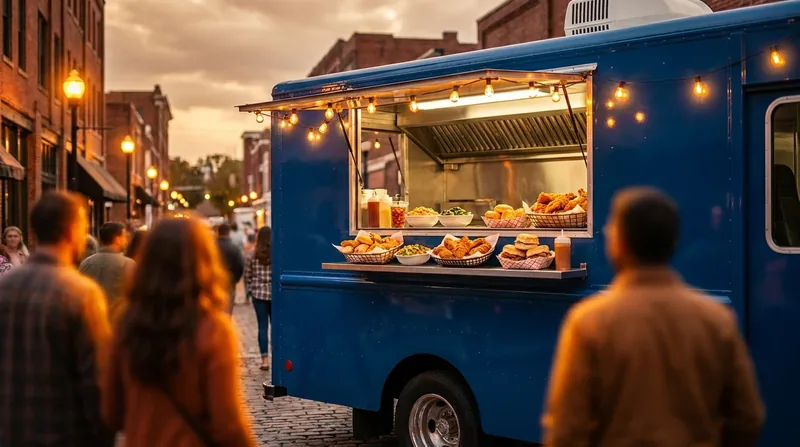
How to Start a Food Truck Business in Illinois: City-by-City Licensing
How to Start a Food Truck Business in Illinois: City-by-City Licensing
Illinois has no statewide food truck license. That single fact changes everything about starting a mobile food business in Illinois. Unlike some states with reciprocal systems, each city and village issues its own licenses and each local health department issues its own mobile food permits. The Food Truck Freedom Act (HB1052) stalled in March 2026, leaving Illinois's fragmented licensing system in place. This means your business in Chicago operates under completely different rules than one in Champaign or Bloomington. Understanding your specific local jurisdiction is the first and most critical step.
Why Illinois Has No Statewide Food Truck License
Many states grant reciprocal food truck licenses that allow vendors to operate across multiple jurisdictions without obtaining separate permits in each location. Illinois does not. Health code enforcement and food permits rest with local health departments, and business licensing rests with cities and villages. This decentralized approach means what works in one city may be explicitly prohibited in another. A commissary approved in one county may not meet the standards of a neighboring jurisdiction. A parking location legal in Springfield may violate ordinances in Peoria.
This system reflects how public health regulation works in Illinois: local health departments answer to state guidelines but maintain local authority over food service operations. For your food truck to operate, you must obtain permits from your specific municipality. There is no workaround, no statewide alternative, and no way to license once and operate everywhere.
Step-by-Step Guide to Starting Your Food Truck in Illinois
Step 1: Identify Your Target Location and Contact Local Health Department
Before doing anything else, identify the city or cities where you plan to operate. Then contact that jurisdiction's local health department directly. Do not call the Illinois Department of Public Health or Department of Revenue expecting statewide guidance on food trucks. Local health departments handle food service licensing. Find your county health department through a web search for "[Your County] Illinois health department mobile food" or by contacting your city or village clerk's office.
When you call, ask specifically: "What are the requirements for operating a mobile food unit (food truck) in [your city/county]?" Request information on commissary requirements, vehicle inspection standards, permit costs, processing time, and renewal cycles. Ask whether the jurisdiction allows food trucks at all; some municipalities prohibit them entirely. Get the name of the inspection supervisor or food service manager so you can follow up with specific questions about your planned menu and truck setup.
Step 2: Establish Your Business Structure
Decide whether you'll operate as a sole proprietorship, partnership, or limited liability company (LLC). Most food entrepreneurs choose an LLC for liability protection and simplicity. If you use an LLC, you'll file Articles of Organization with the Illinois Secretary of State (filing fee $150, standard processing 10 business days). If you operate under a name different from your legal name, you may need to file an assumed business name certificate with your county clerk. Check your local health department's application requirements; some require proof of business registration before they'll issue a food service license.
An attorney can advise on tax treatment and liability structure specific to your situation. The Illinois Small Business Development Center (https://sbdc.illinois.gov/) offers free consulting on business structure and licensing questions.
Step 3: Secure a Commissary (Commercial Kitchen)
Local health departments generally require a food truck to operate from a commissary, a licensed commercial kitchen or servicing base where food is stored and prepped and the truck is cleaned and restocked. Whether you can also cook on the truck depends on your permit category, so confirm with your health department. Some commissaries are dedicated shared-use facilities for food vendors. Others are restaurant kitchens or catering facilities that rent space to food trucks during off-hours. A few operators open private commissaries licensed specifically for that purpose.
Contact commissaries in your area and ask about space availability, hours of use, and cost. Many charge $300 to $800 per month depending on location and hours. Include commissary rental in your startup budget, since most health departments require it. Your local health department can often provide a list of licensed commissaries in your area, or direct you to facilities that meet their approval.
Step 4: Design and Outfit Your Food Truck
Your mobile food unit must meet health and safety codes. It needs a commercial-grade refrigeration unit, hot-holding equipment, handwashing station with hot and cold water, food storage that keeps raw and ready-to-eat items separate, and proper waste management systems. Illinois health codes follow FDA guidelines for mobile food units. Your truck must have adequate lighting, non-absorbent surfaces, and pest-proof storage. Some vendors buy used food trucks and modify them; others purchase new equipment and build custom units. Budget $20,000 to $75,000 for the vehicle and equipment, depending on menu complexity and whether you buy used or new.
Before you finalize the build, ask your local health department for inspection criteria specific to your jurisdiction. Some departments have detailed specifications; others refer to state guidelines. Getting this right the first time avoids costly rework and inspection failures.
Step 5: Obtain Required Permits and Licenses
Your local health department issues food service permits. This includes a license for the mobile food unit itself and, in most cases, a separate commissary food service license or permit. Fees vary widely. Some jurisdictions charge $100 to $200 annually for a food truck license; others charge $500 to $1,000 or more. Renewal cycles also vary, some annually, others on different schedules. Ask your health department for the exact fee, application form, and timeline.
Your city or village may also require a separate business license or mobile food vendor license. This is distinct from the health department permit. Some municipalities charge under $50; others charge $300 to $500 or more for vending permits. A few cities restrict where food trucks can operate or limit the number of licenses issued.
Step 6: Obtain Food Handler Certification
Illinois requires food handlers to complete accredited food handler training within 30 days of hire unless they hold a Certified Food Protection Manager certificate, and your health department may also require a Certified Food Protection Manager for your truck. Costs range from $15 to $50 per person for the certification, and courses are often available online. Your local health department can direct you to approved training providers.
Step 7: Business Registration and Tax Setup
Register your business with the Illinois Department of Revenue through MyTax Illinois (https://tax.illinois.gov/) if you'll collect sales tax. Register for an Illinois sales tax permit if your menu includes taxable food items (most food from a truck does). This is free and processes quickly online. You'll also need a federal Employer Identification Number (EIN) from the IRS if you have employees, and state unemployment insurance registration. Contact an accountant to ensure you're registered for all applicable state and federal requirements.
Step 8: Inspect and Approve
Once your truck is complete and your commissary is ready, schedule a health department inspection. Bring your application, commissary documentation, food handler certifications, and proof of business registration. The inspector will verify that your equipment meets health codes, that your proposed menu is feasible given your setup, and that your commissary arrangement is documented. Inspection typically takes 1 to 2 hours. The inspector will note any deficiencies. Common issues include improper handwashing station setup, inadequate refrigeration, or commissary paperwork problems. Address any findings and schedule a follow-up inspection if needed.
Once approved, you receive your permit or license, usually valid for 1 to 2 years depending on local rules. Mark your renewal date on a calendar; many jurisdictions charge penalties for late renewal.
Materials and Setup You'll Need
- Food truck or cart (purchased or built to code, $20,000 to $75,000)
- Commercial-grade refrigeration and hot-holding equipment
- Handwashing station with hot and cold running water
- Commissary access ($300 to $800 per month)
- Business registration (LLC filing $150, assumed name varies by county)
- General liability insurance ($500 to $1,500 annually)
- Vehicle commercial licensing and registration
- Food handler certifications for yourself and staff ($15 to $50 per person)
- Initial inventory and supplies
- Point-of-sale system or payment processing setup
Tips for Success
Start with one location. Don't try to operate simultaneously in five different cities while you're learning the business. Master one jurisdiction, understand its rules and customers, then expand to other locations only after you've proven the model works.
Build a relationship with your health inspector. Your local health department inspector is not an adversary; they're a resource. Ask questions during inspections. Follow their guidance carefully. When you consider menu changes or equipment modifications, call and ask whether they'll approve it before you buy equipment or reformulate recipes.
Document everything. Keep copies of every permit, license, certification, and inspection report. Maintain records of food sourcing, temperatures, and handling. If you face a compliance issue down the road, documentation demonstrates your good-faith effort to operate safely.
Budget for annual renewals and updates. Licensing is not a one-time cost. Plan for annual permit renewals, commissary rental, food handler training renewal (every 3 years), liability insurance, and vehicle maintenance. Most vendors spend $3,000 to $8,000 annually on licensing and compliance.
Verify rules before expansion. If you want to add a second truck or operate in a neighboring city, don't assume the new location has the same rules. Each jurisdiction can have different requirements for commissaries, parking, operating hours, and menu categories. Call ahead.
Common Mistakes to Avoid
Assuming a state license covers all cities. Illinois has no statewide reciprocal system. A permit from one city does not allow you to operate in another.
Not contacting the health department first. Many people buy a truck, outfit it, and then discover it doesn't meet local standards or that the city restricts food trucks in specific areas. Call the health department before you invest in equipment.
Skipping the commissary or using an unapproved kitchen. Commissary requirements are mandatory. Attempting to prepare food in a residential kitchen or an unapproved facility will result in permit denial and potential legal action.
Underestimating costs. Food truck startup costs are substantial. Many operators underestimate the cost of equipment, commissary, permits, insurance, and vehicle maintenance. Budget conservatively and assume higher-than-expected costs for your specific jurisdiction.
Missing renewal deadlines. Licenses expire. If you miss a renewal deadline, your permit may lapse, and you cannot legally operate. Some jurisdictions impose penalties or require re-inspection after a lapse.
Ignoring vehicle registration and commercial licensing. Your truck must be properly registered, insured, and licensed as a commercial vehicle. Mixing personal and business vehicle registration creates legal and liability problems.
Expected Results and Timeline
Assuming you're well organized and your local health department processes applications efficiently, expect the full licensing process to take 6 to 12 weeks from initial contact to receiving your permit. Some jurisdictions move faster; others slower. Processing time depends on application backlog, whether your truck passes inspection on the first attempt, and how quickly you secure commissary documentation. In busy municipalities like Chicago, processing may take longer.
Total startup costs typically range from $35,000 to $100,000 when you include truck, equipment, permits, insurance, initial inventory, and three months of operating costs. Licensing and permit costs themselves are usually $500 to $3,000 in total initial permits, depending on your jurisdiction, though individual city costs vary widely.
Important Disclaimer
This article is informational only and does not constitute legal or tax advice. Food truck licensing, health code compliance, and business structure decisions vary significantly by location. Illinois regulations change, and local rules differ. Before starting a food truck business, consult with a licensed attorney who practices food service law and a certified public accountant (CPA) familiar with mobile food operations in your specific jurisdiction. Contact your local health department and city clerk's office directly to confirm current requirements and fees. Relying solely on this article without local verification could result in permit denial, compliance violations, or legal liability.
The Illinois Small Business Development Center (https://sbdc.illinois.gov/) and the U.S. Small Business Administration (https://www.sba.gov/district/illinois) offer free or low-cost consulting to help you navigate startup requirements.
Keep exploring: related Illinois guides
- How to Start a Cottage Food Business in Illinois Under the Home-to-Market Act
- How to Start a Vending Machine Business in Illinois
- How to Start a Coffee Shop Business in Illinois
- How to Get a Food Truck License in Chicago
- How to Start an LLC in Illinois
- Illinois Business License
- How Much Does It Cost to Start a Business in Illinois
- All Illinois business types
- Every Illinois guide in one place